
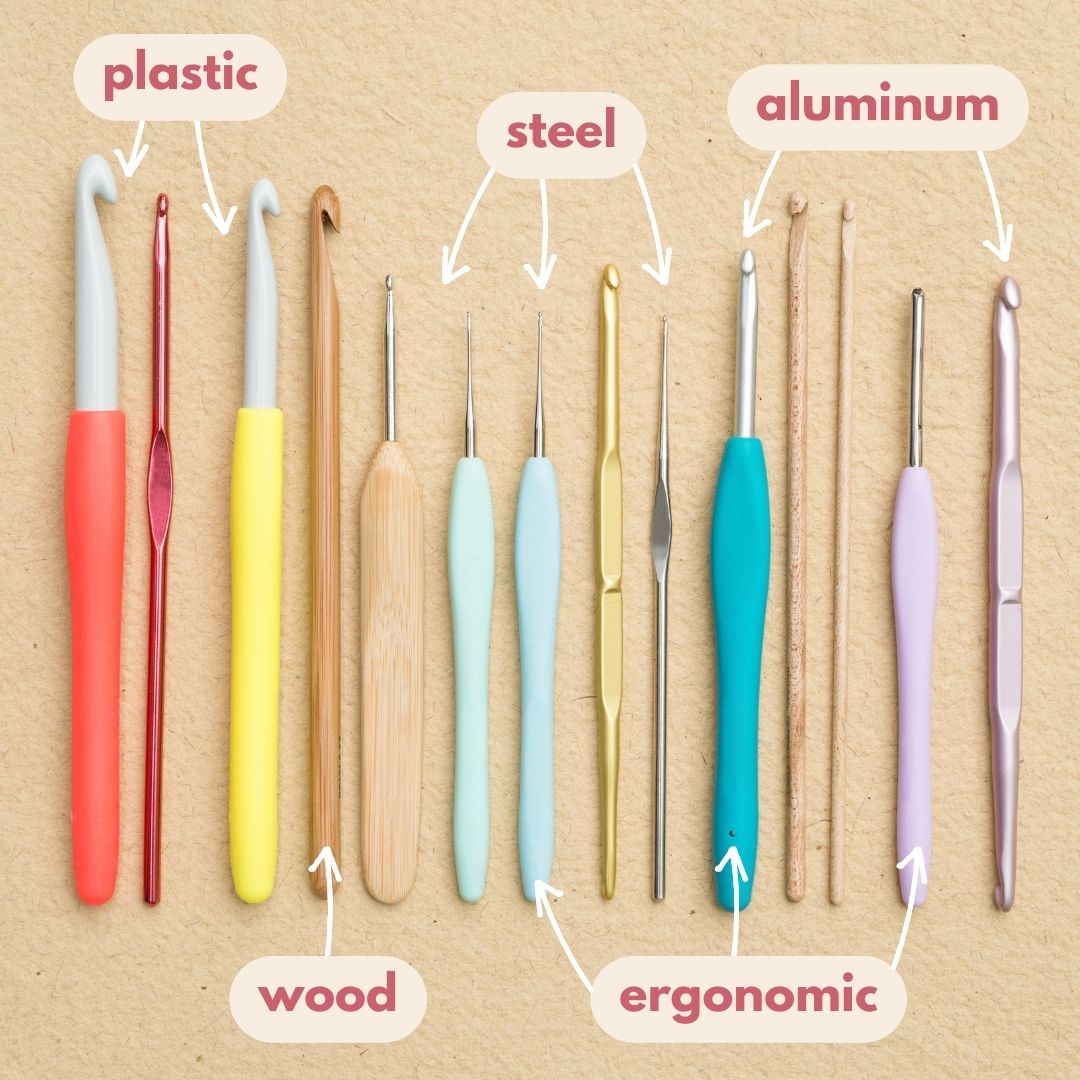
If you’re picking up your hook for a new project, you might ask: “Which hook should I use?” The simple answer is: the one that feels good in your hand and works well with your yarn and stitch style. But if you like to dig a little deeper, let’s explore what makes hooks different, why those differences matter, and how to pick wisely.
1. What makes hooks different?
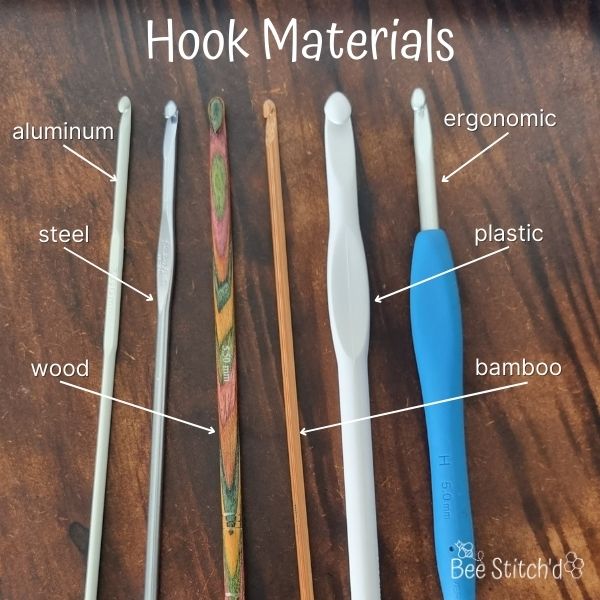
When we look at crochet hooks, the key differences fall into several categories:
- Material: What the hook is made from (metal, wood, plastic, etc.).
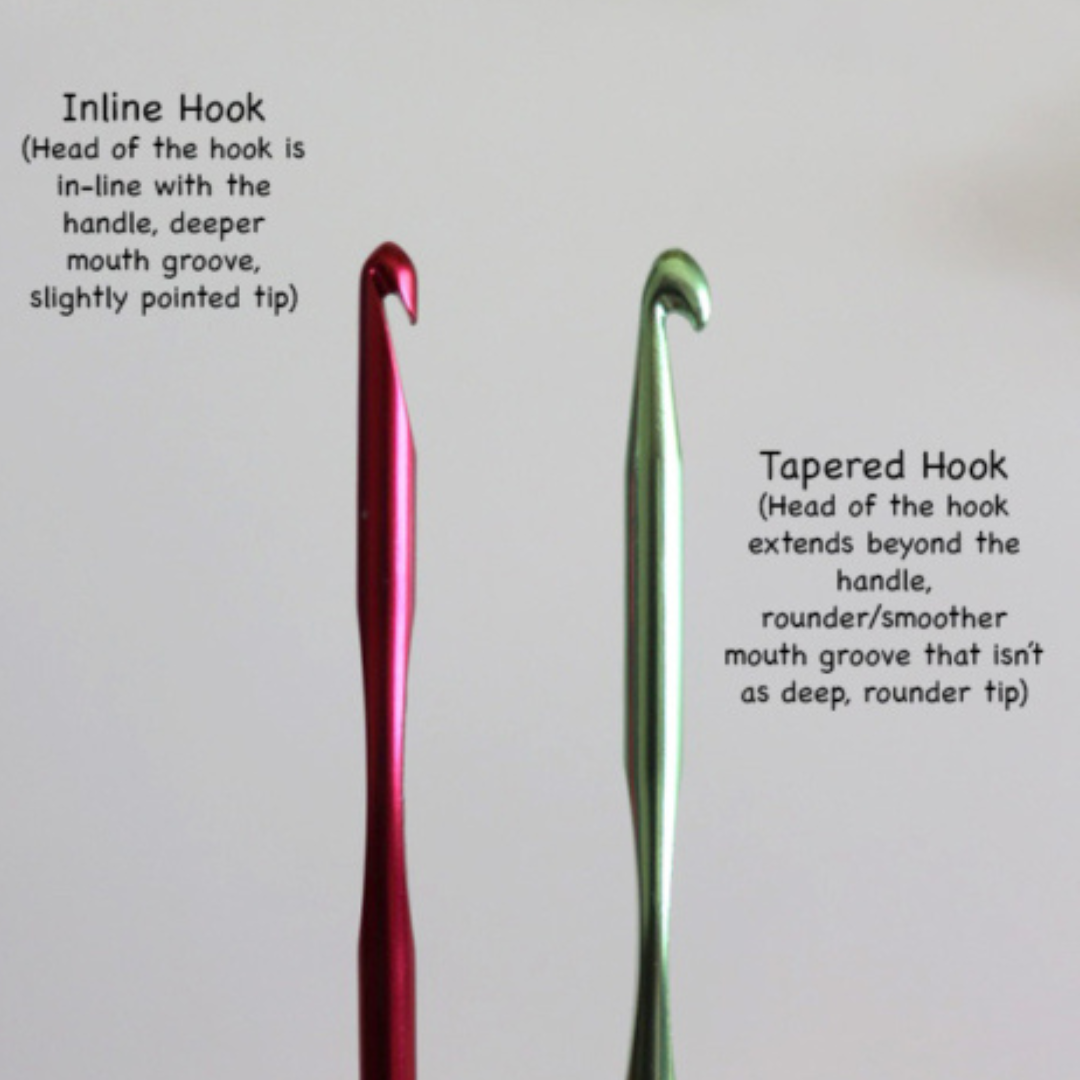
- Shape / head style: For example the inline vs tapered throat or head of the hook.
- Grip / handle / ergonomics: Some hooks are plain, others have contoured, cushioned or bulky handles for comfort.
- Specialty hooks: Hooks made for particular techniques (e.g., thread work, Tunisian, double-ended).
Each of these factors can affect how easily you make stitches, how comfortable the hook is during longer sessions, and how appropriate it is for a particular yarn or project.
2. Materials: Pros, Cons & Uses
Let’s walk through common materials and what they bring to the table.
Metal (e.g., aluminium, steel)
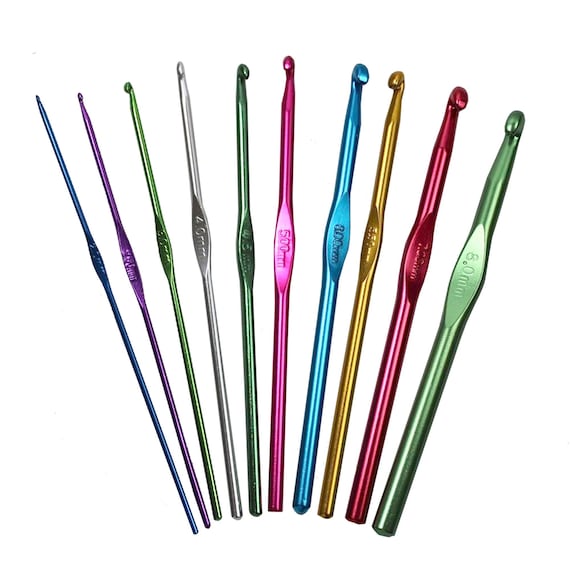
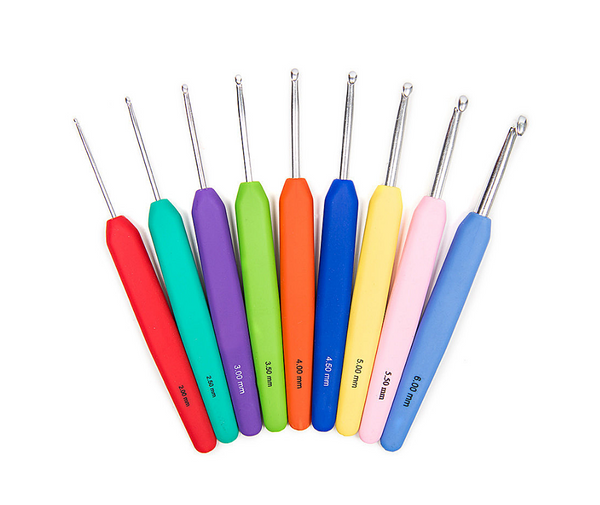

- Pros: Durable, smooth finish (especially aluminium) so stitches glide easily. Good size-range availability, especially metal.
- Cons: Metal can be cold to the touch (less comfortable for some), and for heavy yarns the speed can feel fast/less controlled. Steel hooks are excellent for fine thread work, but might be less comfortable for large bulky yarns.
- Use case: A safe “workhorse” choice for many yarn weights from fine to medium; steel for lace/thread.
Wood / Bamboo

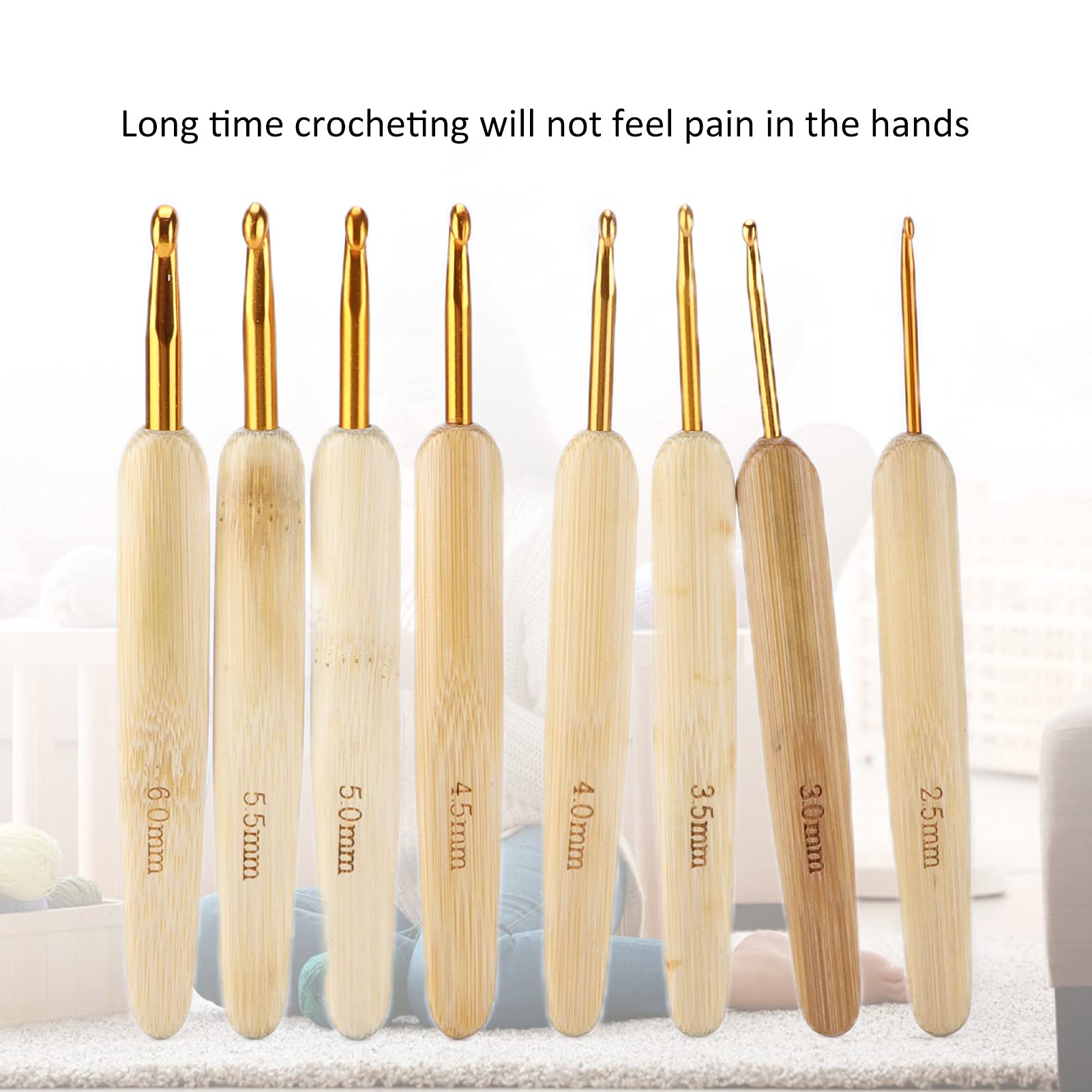

- Pros: Warm in the hand, slightly more “grip” (less slippery) so good when working with slippery yarns; often lighter. knitproneedles.co.uk+1
- Cons: Can be less smooth than metal; may have more friction which can slow stitching. Some finer sizes may be more prone to breakage. skillshare.com+1
- Use case: If comfort matters (e.g., long sessions, hand/wrist issues), or when working with yarns that catch/slip.
Plastic / Acrylic


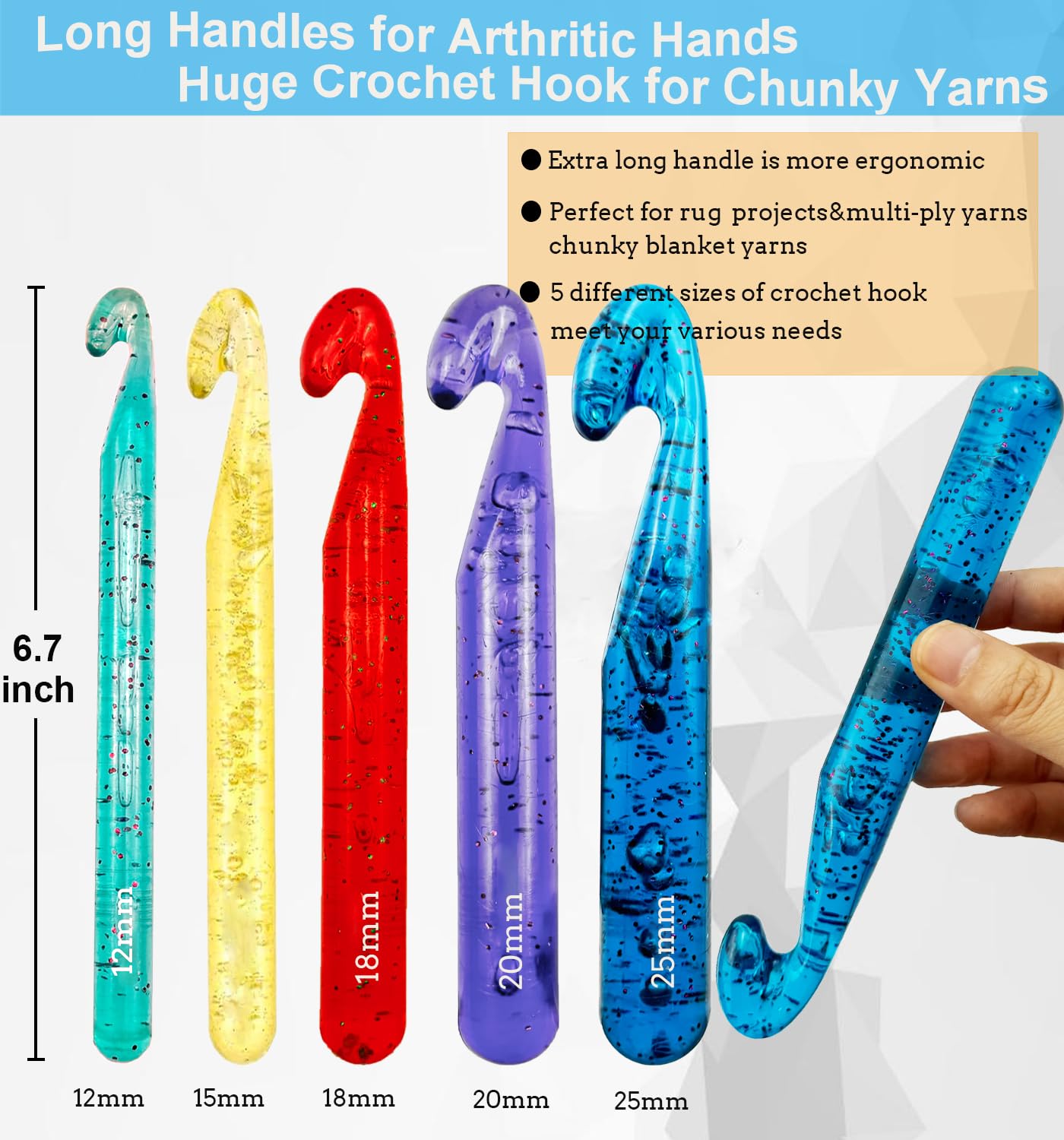
- Pros: Very budget-friendly, light weight, often colourful and fun. Large sizes in plastic are common for bulky/mega yarns.
- Cons: May have more drag (friction) depending on quality; not always as durable; may flex.
- Use case: Great for beginners, kids, or large-scale steps where precision isn’t the priority.
Specialty Materials / Combos
Some hooks combine materials (metal hook with an ergonomic rubber handle) or are made in unique materials (glass, resin, exotic woods).
- Use case: These are nice “treat” hooks, or for very specific preferences (speed, comfort, aesthetic). But for most of us a metal or wood hook is perfectly fine.
3. Hook Shape: Inline vs Tapered (and more)
A key shape difference is how the throat and head of the hook are formed.
- Inline hooks: The head and shank are “in line”, with a sharper throat design. These tend to help maintain more even tension, and are often recommended for beginners.
- Tapered hooks: The throat is more sloped/rounded, and the transition from shank to head is smoother. These can allow faster stitching, but may require a more experienced hand to avoid inconsistency in tension.
- Other shape features: Length of shaft (how many loops can rest on it), handle shape (flat vs rounded vs ergonomic), and extra features like double‐ended hooks or Tunisian hooks.
Tip: If you’re new, try both inline and tapered styles and see which feels more natural. The “right” shape is the one you reach for without thinking.
4. Ergonomics & Handle / Grip

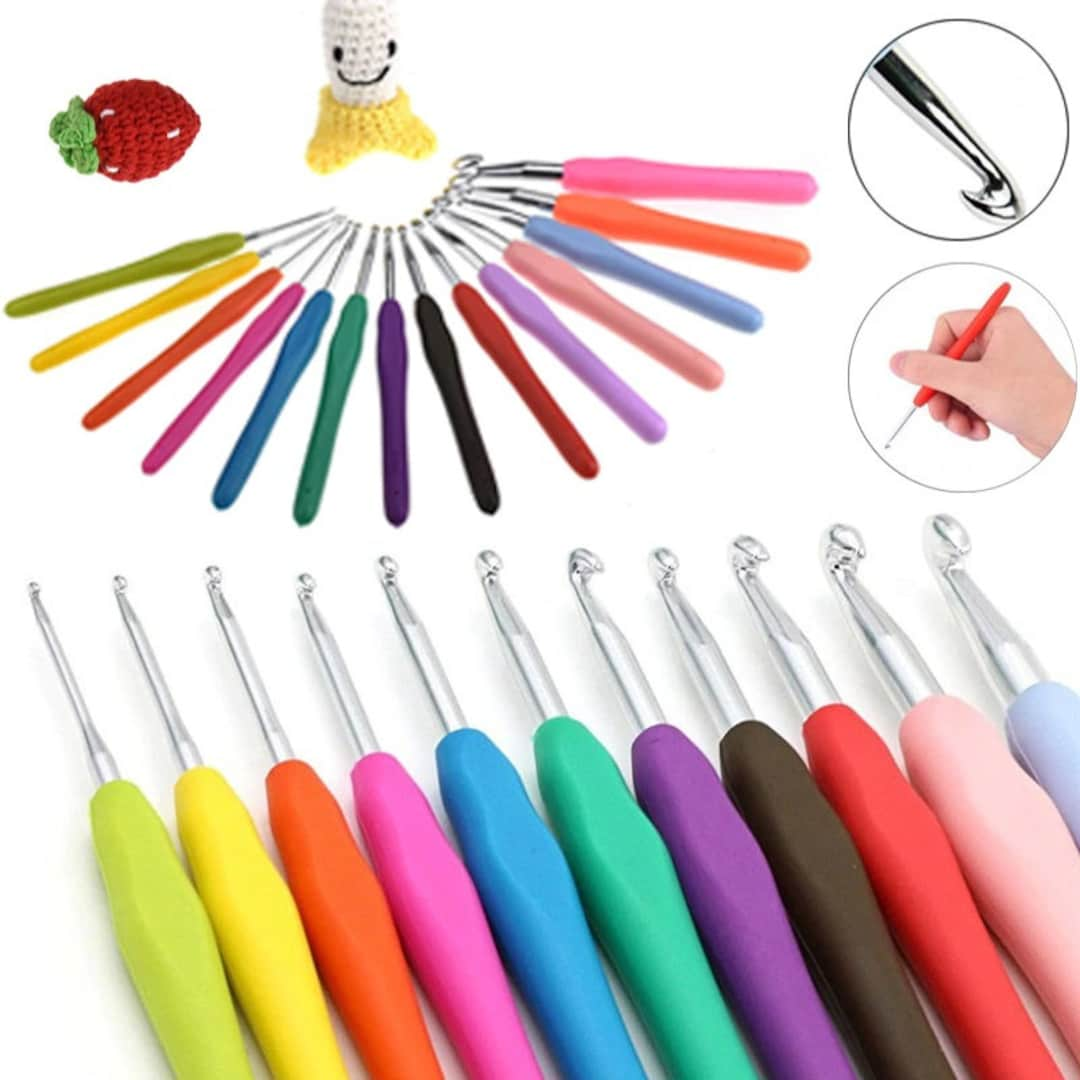
Comfort matters — especially if you crochet for long sessions or have hand/wrist issues. Hooks with soft grips, thicker handles, or specially shaped designs can reduce fatigue.
- Look for:
- A thumb rest or flat area for control.
- Handles made of rubber/silicon or shaped for comfort.
- Weight and length of the hook: longer handles or heavier materials may tire hands quicker.
- If you find you’re going through yarn more than the hook, or your hand gets sore: consider switching to an ergonomic handle.
5. Specialty Hooks & Techniques


Beyond “standard” single‐ended hooks, there are specialized types:
- Thread/steel hooks: For fine thread work (doilies, lace) — often very small diameter, steel material.
- Tunisian / Afghan hooks: Longer or cable attached to hold many stitches at once; used for Tunisian crochet.
- Double‐ended hooks: Hooks that have a hook on both ends; used for specific techniques (some Tunisian, some decorative).
- Interchangeable / modular hooks: For example, a metal hook tip plus a thicker handle that’s detachable, allowing flexibility.
- Novelty / craft hooks: Big size hooks for chunky yarn, or hooks with built‐in light, laser guide, etc.
These are wonderful to explore once you’re comfortable with basics; but for most projects you’ll only need a good standard hook that suits your yarn and your style.
6. Matching Hook to Project & Yarn
Here are some practical tips to match hook to your project:
- Check the yarn label: Most yarns specify a recommended hook size. Use that as a starting point.
- Gauge matters: If your pattern asks for a specific gauge, your hook size can affect it. A larger hook = looser stitches; a smaller hook = tighter stitches.
- Yarn behaviour: Slippery yarns (e.g., smooth cotton, silky blends) might benefit from a hook that offers a little more grip (wood or bamboo) so you don’t lose control. On the other hand, fuzzy yarns or textured yarns might slide better on metal.
- Comfort & speed: If you’re making something long (blanket, shawl) or if you know you’ll be crocheting for extended time, comfort of the hook (handle, weight, material) matters significantly.
- Technique: If you’re doing something specialised (fine thread lace, Tunisian, chunky yarn) pick a hook suited for that — small steel hook or long Tunisian, for example.
7. My Recommended Starter Set
If you’re building a toolkit (or blogging about building one), here’s a simple starter set you might recommend:
- One metal (aluminium) hook in a medium size (e.g., 4 mm or 5 mm) — to cover many standard yarn projects.
- One wood or bamboo hook of a similar size — just to test how it feels and works with different yarns.
- One ergonomic hooked option with soft grip (same or slightly larger size) — for comfort during longer sessions.
- Bonus: A small steel hook (if you ever want to try finer thread/lace) or a large plastic hook (for bulky yarn or beginners/children).
Over time you’ll identify your favourite size, material and handle style — then you might branch out into “premium” hooks for speed, comfort or aesthetic.
8. Final Thoughts
There is no one “best” crochet hook for everyone. The best hook is the one you feel comfortable with, that works well for the yarn and project you’re doing, and that you enjoy using. As you crochet more, you’ll develop personal preferences — and that’s part of the fun.
For your blog audience, encourage them to experiment, hold different hooks in hand, try different materials and see what works. The “right tool” makes your creation smoother, more enjoyable and more creative.
Happy hooking — and happy blogging! 🧶


 Warm and Woolly